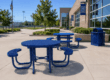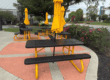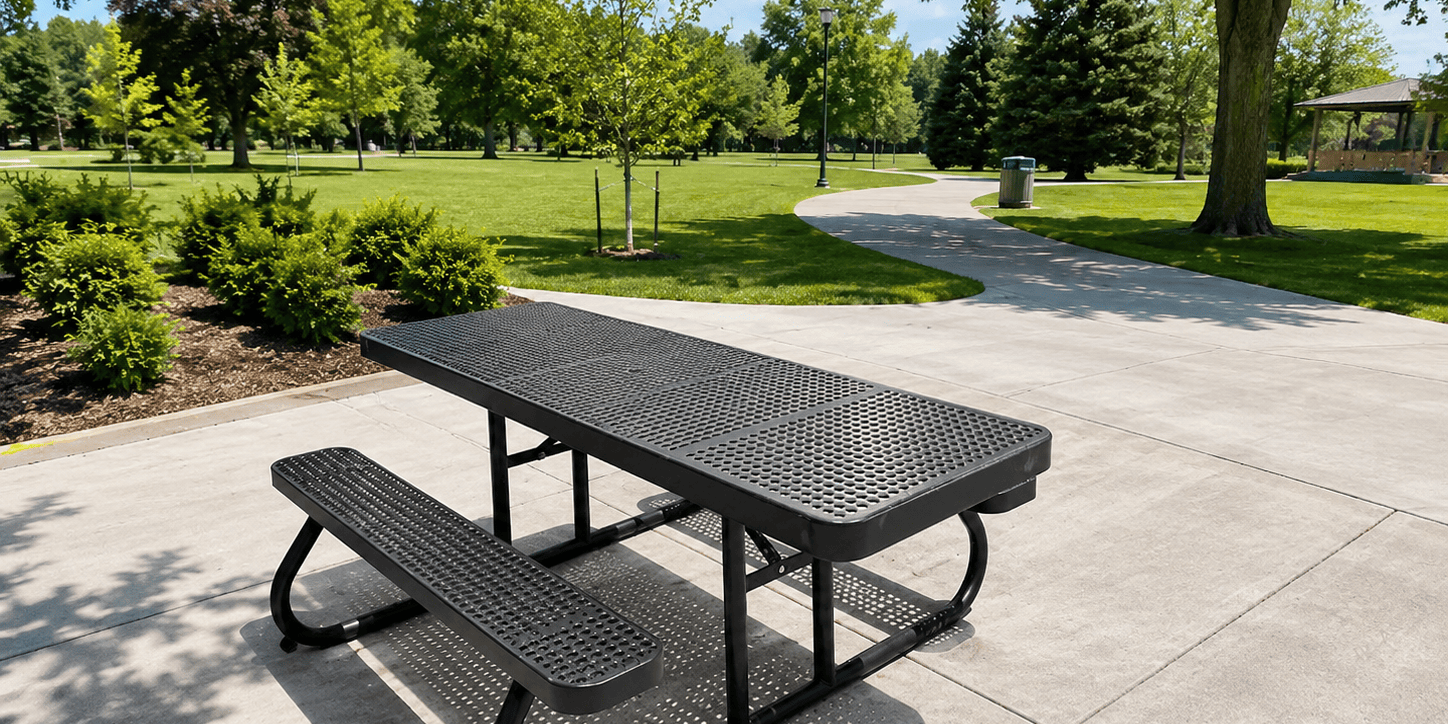
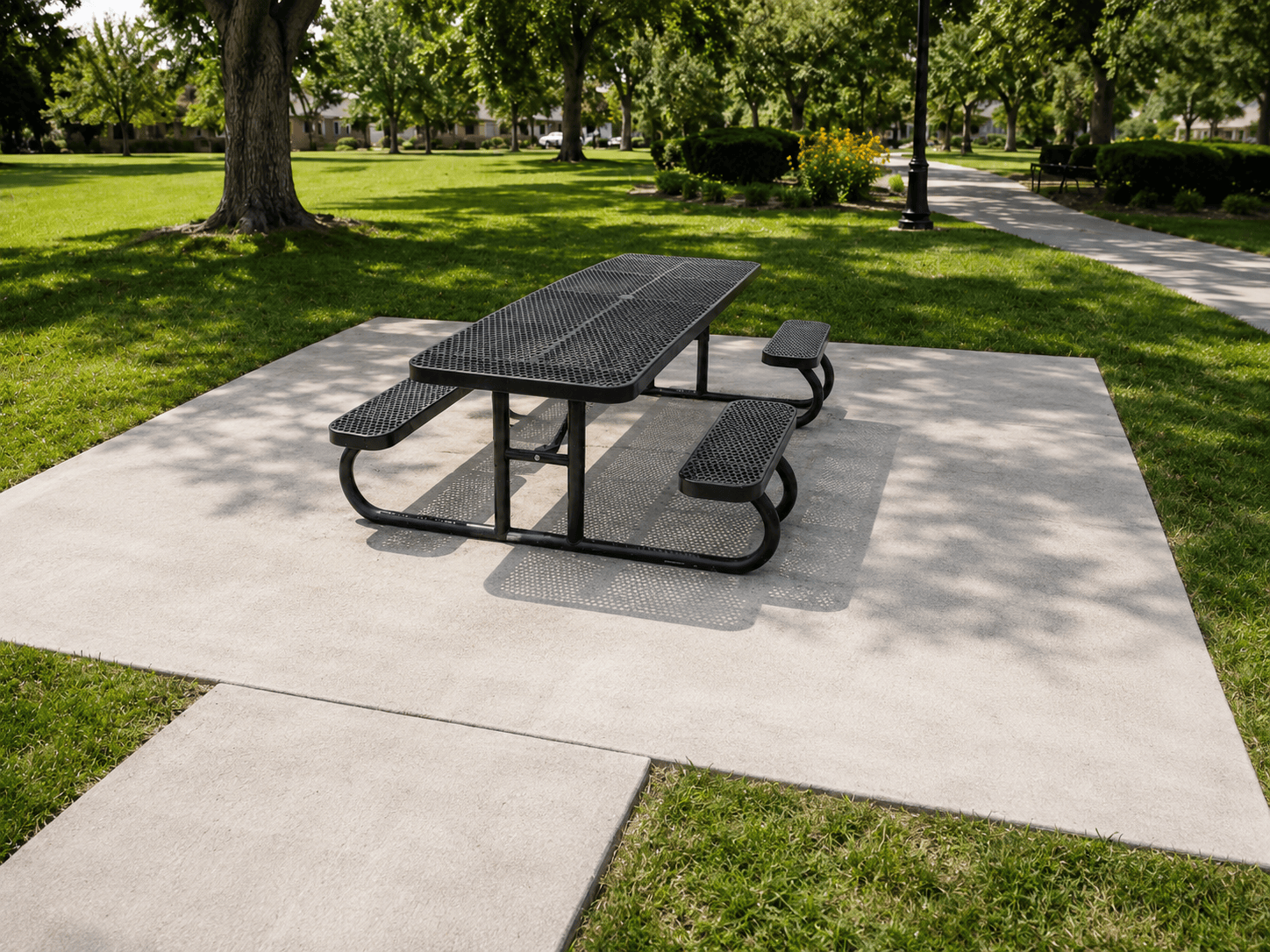
A family arrives at the park for a Saturday picnic. One member uses a wheelchair. The only accessible table sits on a concrete pad at the far edge of the pavilion, separated from every other group.
Technically, the park is compliant. Practically, it just told that family they belong on the margins.
ADA compliant park furniture is outdoor furniture engineered to meet the accessibility standards established by the Americans with Disabilities Act, including requirements for table height (28 to 34 inches), knee clearance (minimum 27 inches), and clear ground space (30 x 48 inches) for wheelchair users. But compliance and inclusion are not the same thing.
At Premier Polysteel, we design and manufacture plastisol (polyvinyl) coated steel ADA accessible picnic tables that go beyond meeting specifications. Our accessible line offers multiple configurations so wheelchair users are part of the gathering, not an afterthought next to it.
This guide is for anyone responsible for planning, specifying, or purchasing outdoor furniture for public spaces. The goal is not just to pass an inspection. It is to build parks that 61 million Americans with disabilities can actually use and enjoy.
What Makes Park Furniture ADA Compliant?
The Americans with Disabilities Act establishes specific dimensional and spatial requirements for outdoor furniture in public spaces. For any entity receiving federal funding or operating as a public accommodation, these are not suggestions. They are law.
The critical specs for ADA compliant picnic tables:
- Table surface height: Between 28 and 34 inches above the ground
- Knee clearance: Minimum 27 inches high, 30 inches wide, and 19 inches deep beneath the tabletop
- Clear ground space: A 30 x 48 inch area at each wheelchair position, plus 36 inches of clear width on all usable sides
- Wheelchair positions required: One space per 24 linear feet of usable tabletop perimeter. Tables up to 9 feet need at least one wheelchair space. Tables between 10 and 20 feet need two.
Premier Polysteel’s ADA accessible picnic tables meet every one of these requirements across our full accessible line. Under the Architectural Barriers Act Accessibility Standards, at least 20% of constructed picnic units in a picnic facility must be accessible. Getting the furniture right is not optional.
But dimensions are only part of the equation. Where the wheelchair position sits relative to everyone else at the table determines whether the furniture enables compliance or genuine inclusion.
Why Compliance Alone Isn’t Enough
Meeting ADA dimensional standards protects you from a lawsuit. It does not guarantee the space you built actually serves the community around it. That gap between legal protection and genuine usability is exactly what Premier Polysteel’s accessible furniture is engineered to close.
According to the CDC, 28.7% of U.S. adults live with some form of disability. That is roughly 61 million people. Mobility impairment is among the most common types, affecting approximately 12.2% of the adult population.
Among adults over 65, nearly half report a disability. That is the population Premier Polysteel designs for, and it is growing every year.
The need extends well beyond wheelchair users. Parents navigating strollers, seniors relying on walkers, visitors recovering from surgery, children with mobility aids. When a park’s furniture accommodates only the narrow ADA minimum, it excludes a far larger group than most planners realize. Our plastisol-coated steel tables and benches serve all of them because the same features that make them wheelchair accessible also make them safer, more comfortable, and more durable for every visitor.
The American Society of Landscape Architects draws a clear distinction between accessibility and universal design. Accessibility meets the legal floor. Universal design creates spaces where people of all abilities participate naturally, without specialized accommodations that separate or stigmatize. Premier Polysteel’s approach to ADA furniture follows the universal design principle: build the inclusion into the product itself so it does not require special signage, separate placement, or a different aesthetic.
Research shows that while seniors represent roughly 20% of the population, they account for only 4% of park visitors. Furniture that is uncomfortable, difficult to reach, or visually signals “this is the special table” contributes to that gap.
Premier Polysteel’s accessible line gives planners options that match how people actually gather. Our 8′ ADA Accessible Picnic Tables provide wheelchair positions on both ends, accommodating two wheelchair users at a single table. Our 8′ ADA Accessible Side-Entry Picnic Table goes a step further by placing a 36.5-inch wheelchair opening at the center of one long side, putting the user in the middle of the group. Different site layouts call for different configurations, and having both options means planners never have to compromise.
ADA Minimum vs. Truly Inclusive Design
Most purchasing decisions start and stop at compliance. The table below shows what changes when you design beyond the minimum.
| Design Element | ADA Minimum Compliance | Truly Inclusive Design |
|---|---|---|
| Wheelchair position | One open space per 24 ft of tabletop perimeter, any location | Centered or integrated seating that places the user within the social group |
| Table surface | Correct height and clearance dimensions met | Surface material that stays cool in direct sun, resists moisture, and requires no maintenance that could take it out of service |
| Pathway connection | An accessible route exists to the furniture | Furniture placed in the main gathering area with direct pathway access, not isolated at the perimeter |
| Seating variety | At least one accessible table in the area | A mix of accessible tables, benches with and without armrests, and open spaces beside fixed seating |
| Material durability | No specific requirement beyond stability | Material that will not rust, chip, splinter, or develop sharp edges over time, eliminating future safety hazards |
| Mounting | Stable placement on level surface | Surface-mount or direct-bury anchoring that prevents shifting, tipping, or unauthorized removal |
| Thermal comfort | Not addressed | Coating that acts as a thermal barrier so surfaces do not burn exposed skin in summer |
| Long-term compliance | Not addressed | Zero-maintenance materials that remain dimensionally and structurally compliant for decades without refinishing |
Premier Polysteel’s plastisol-coated steel addresses every item in the right column. The 1/8+ inch UV-stable coating eliminates rust, corrosion-caused sharp edges, and hot metal surfaces. No exposed metal anywhere on the frame means the furniture stays safe and compliant for the full life of the product, not just the first season after installation.
The Real Cost of Getting It Wrong
The most expensive compliance failure is not the one that triggers a federal penalty. It is the one that happens gradually, when furniture that met every ADA spec on installation day degrades into non-compliance within a few years. This is where material choice becomes a compliance decision, not just a purchasing one.
A powder-coated steel table that chips and rusts develops exposed metal edges. Those edges are a safety hazard for any park visitor, but they pose a specific risk to wheelchair users who transfer onto benches or maneuver close to table frames. Corrosion that compromises structural integrity can also shift the dimensional tolerances the table was built to meet, pushing knee clearance or surface height out of spec.
A wooden table that warps and splinters creates the same problem from a different direction. Warped frames may no longer maintain required knee clearance dimensions. Splintered seats and surfaces are a liability issue for every visitor, and they make the table unusable for anyone who needs to slide or transfer into position.
In both cases, the facility purchased compliant furniture on day one and owned non-compliant furniture by year three.
Premier Polysteel’s plastisol-coated steel eliminates that degradation cycle entirely. The coating does not chip, peel, rust, or lose structural integrity under UV exposure, salt air, or heavy daily use. No exposed metal anywhere on the frame means no corrosion-created sharp edges, no bare steel that conducts heat, and no dimensional drift from material failure. The compliance that existed at installation is the same compliance the table maintains 15 years later. We back that with an industry-leading 20-year warranty.
Compare a single Premier Polysteel 8′ ADA Accessible Side-Entry Picnic Table against purchasing a lower-grade table, replacing it twice over 20 years, and budgeting annual labor for sanding, recoating, or hardware repair. One table, one purchase, zero maintenance cycles. The math favors buying furniture you never have to think about again.
How Premier Polysteel Engineers Furniture for Inclusion
Meeting ADA dimensions is a starting point. How those dimensions are achieved determines whether the table genuinely includes wheelchair users or merely tolerates their presence.
End-entry accessible seating. Our 8′ ADA end-entry tables feature 6-foot centered benches on each long side with wheelchair positions on both ends, accommodating two wheelchair users at once. This configuration is ideal for high-traffic facilities that need maximum accessible capacity at every table.
Centered side-entry seating. Our 8′ ADA Side-Entry table features a 36.5-inch opening at the center of one long side. A 96-inch bench runs along the opposite side with two 30-inch end seats completing the layout. The wheelchair user sits surrounded by other people, fully integrated into the group. The table weighs 320 pounds and will not tip even if every seated person shifts to the same side.
Three-sided accessible design. The 4′ x 5′ ADA table provides wheelchair access on one full side with standard seating on the remaining three sides. For smaller gathering areas that need a compact accessible option without losing group seating capacity, this configuration delivers both compliance and a social layout.
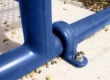
Full plastisol coating on every surface. Tabletops, seats, legs, braces, and structural connections are all encapsulated in a 1/8+ inch layer of plastisol. No exposed metal means no rust-created sharp edges that could injure a user transferring from a wheelchair. No bare steel surfaces that conduct solar heat and burn skin. No corrosion that compromises the frame’s structural integrity or dimensional accuracy over time.
Antimicrobial protection. Our plastisol coating includes antimicrobial properties. For accessible tables in schools, healthcare-adjacent facilities, and high-touch public spaces, this adds a hygiene layer that standard coatings cannot match.
Multiple mounting configurations. Free-standing, surface-mount, and direct-bury options are available across the accessible line. Surface-mount and direct-bury installations anchor the table permanently, preventing the gradual shifting that can obstruct wheelchair approach zones over time.
12 UV-stable color options. In inclusive park design, color contrast between furniture and surrounding surfaces aids wayfinding for visitors with low vision. Premier Polysteel’s plastisol is colored throughout its full thickness, so the color will not fade, chip, or require repainting. The visual contrast you install is the visual contrast that remains.
Planning an Inclusive Park from the Ground Up
Accessible furniture performs best when the space around it is designed with the same intent.
Connect furniture to primary pathways. ADA requires a minimum 36-inch pathway width, but 60 inches allows two wheelchairs to pass or a wheelchair user and a walking companion to travel side by side. Place Premier Polysteel’s accessible tables along main routes where the gathering happens, not at the ends of spur paths that dead-end at a single isolated table.
Offer seating variety throughout the space. Not every visitor needs the same accommodation. Benches with armrests help older adults sit and stand safely. Benches without armrests accommodate users with wider mobility devices or those who need to transfer laterally. Tables with wheelchair positions serve those who need surface access.
Placing these options together, rather than segregating them by type, normalizes accessibility across the entire park. Premier Polysteel’s bench lines include Champion, Champion Supreme, and Grand Contour styles in configurations that support exactly this kind of variety.
Design the space around the furniture, not just the furniture itself. Accessible receptacles placed within reach of seated users, shade coverage that extends over wheelchair approach zones and not just tabletops, and level ground surfaces extending at least 36 inches beyond all furniture edges all contribute to a space that is genuinely usable.
Anchor furniture permanently in high-traffic areas. Furniture that shifts position over time can block wheelchair clearance zones and push the layout out of compliance. Premier Polysteel’s surface-mount kits and direct-bury options eliminate that drift, keeping the spatial geometry intact years after installation.
Frequently Asked Questions About ADA Park Furniture
What makes a picnic table ADA compliant?
An ADA compliant picnic table must have a surface height between 28 and 34 inches, minimum knee clearance of 27 inches high, 30 inches wide, and 19 inches deep, and a clear ground space of 30 x 48 inches at each wheelchair position. At least one wheelchair space is required per 24 linear feet of usable tabletop perimeter. Premier Polysteel’s full ADA accessible line meets every one of these requirements.
How many ADA accessible tables does a park need?
Under the Architectural Barriers Act Accessibility Standards, at least 20% of constructed picnic units at each picnic facility must be accessible, with a minimum of one. Accessible units must also be distributed among the various types of picnic units provided, so a park with both 4-foot and 8-foot tables should have accessible versions of each. Premier Polysteel offers both sizes in our ADA accessible line for exactly this reason.
Does ADA compliant furniture have to look institutional?
No. Premier Polysteel ADA accessible picnic tables are available in a range of UV-stable color options with expanded metal or perforated steel surface styles. Accessible tables do not need to look different from the rest of the site furniture. They just need to be engineered to meet the dimensional and spatial requirements.
What is the best material for ADA park furniture that stays compliant long-term?
Plastisol-coated steel maintains its structural dimensions and safety profile for decades without maintenance. Premier Polysteel’s 1/8+ inch plastisol coating does not chip, rust, warp, or develop sharp edges over time. Wood warps and splinters. Powder-coated steel chips and exposes bare metal to corrosion. Both failure modes can push originally compliant furniture out of spec within a few years.
Can existing parks be retrofitted with ADA accessible furniture?
Yes. Premier Polysteel ADA accessible tables come in free-standing, surface-mount, and direct-bury configurations that can be installed in existing park layouts. The critical step is ensuring accessible pathways connect to the new furniture placement so the table is reachable, not just present.
Build Parks That Welcome Everyone
ADA compliance protects your facility legally. Inclusive design protects your community’s ability to actually use it. When a wheelchair user has a real seat at the table instead of an afterthought at the edge of the pavilion, when a senior with a walker can reach a bench along the main path instead of navigating a gravel spur, the park is doing what parks are supposed to do. It is bringing people together.
Premier Polysteel’s ADA accessible picnic tables and site amenities are Made in the U.S.A. at our Northwood, Iowa facility, backed by a 20-year warranty, and engineered for the kind of inclusion that lasts.