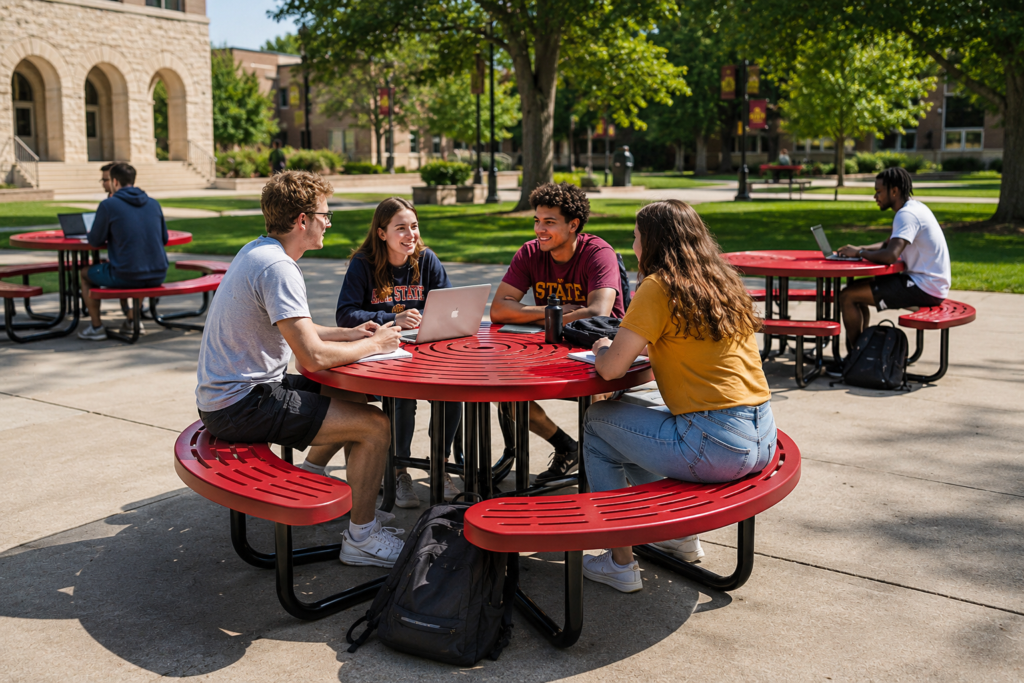
Cross almost any campus at midday and the pattern repeats itself: the tables near the coffee cart are packed while a cluster of benches fifty feet away sits empty. Give it a year and a few of those benches have drifted across the lawn, and the cheaper ones are already streaking rust at the bolts. The furniture didn’t fail the campus. The layout and the build quality did.
That gap between the seating a campus installs and the seating students actually use is the whole problem. The spots that fill up are the ones that work as a campus “third place”: the informal, in-between spaces where students land between class and dorm to study, eat, and stay a while. Outdoor study spaces for college campuses succeed when they earn that role and fail when they don’t, and furniture is a bigger part of that equation than most master plans admit.
At Premier Polysteel, we build the plastisol-coated steel tables, benches, and receptacles that turn a nice-looking lawn into a place students choose. Here is how to design one they’ll actually use, and how to make sure it still looks intentional two decades from now.
Why Outdoor Study Spaces for College Campuses Sit Empty
Empty seating is rarely an aesthetics problem. It’s a behavior problem. Students gravitate to spots that feel comfortable, connected, and usable for the thing they came to do, and they ignore the ones that don’t, no matter how good they looked in the rendering.
The demand is real. In a survey of 207 undergraduates, 54.2% said they use campus green space specifically to relieve stress (International Journal of Environmental Research and Public Health, 2019). A 2024 scoping review in Urban Forestry & Urban Greening looked wider: of the 54 studies it examined, all but two reported a positive link between campus landscapes and student mental health.
Students want to be outside. They just won’t use furniture that’s uncomfortable, badly placed, or visibly falling apart.
That’s the lens for every decision that follows: design for how students behave, then specify furniture engineered to survive that behavior for the long haul.
Design for the Three Ways Students Actually Study
Students don’t study one way, so a single style of seating repeated across campus underperforms. We think about it as three zones, and the right Premier Polysteel product fits each one.
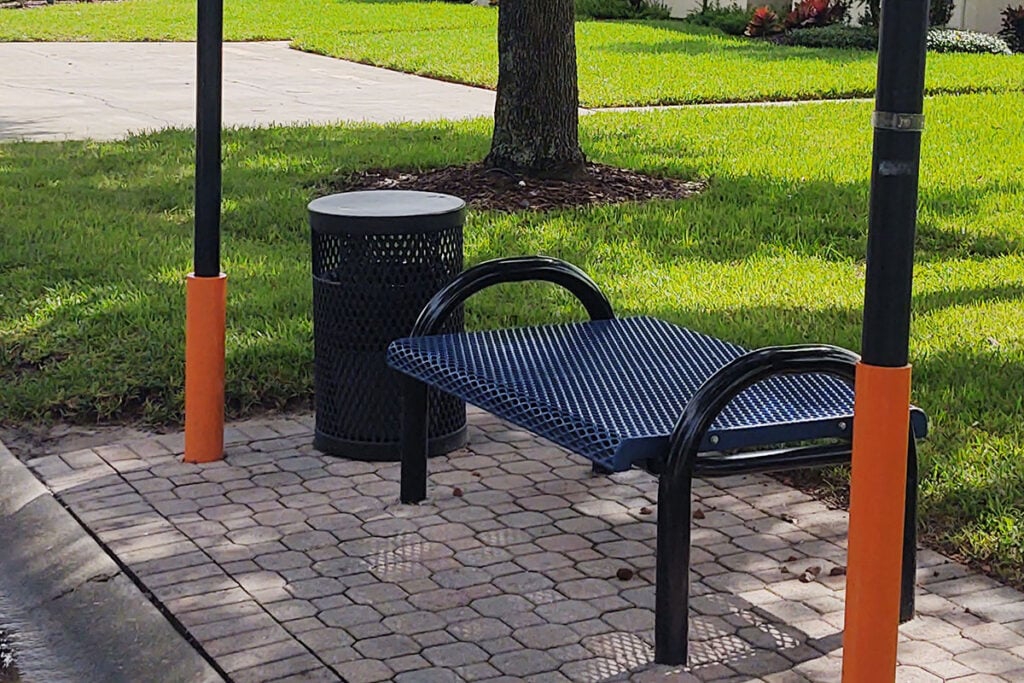
Solo focus. Individual students with a laptop and headphones want to be near the action but not in it. Single Premier Polysteel benches along walkways and building edges give them a landing spot without forcing a group setup. Our Grand Contour Benches add an ergonomic, contoured seat for students who settle in for an hour.
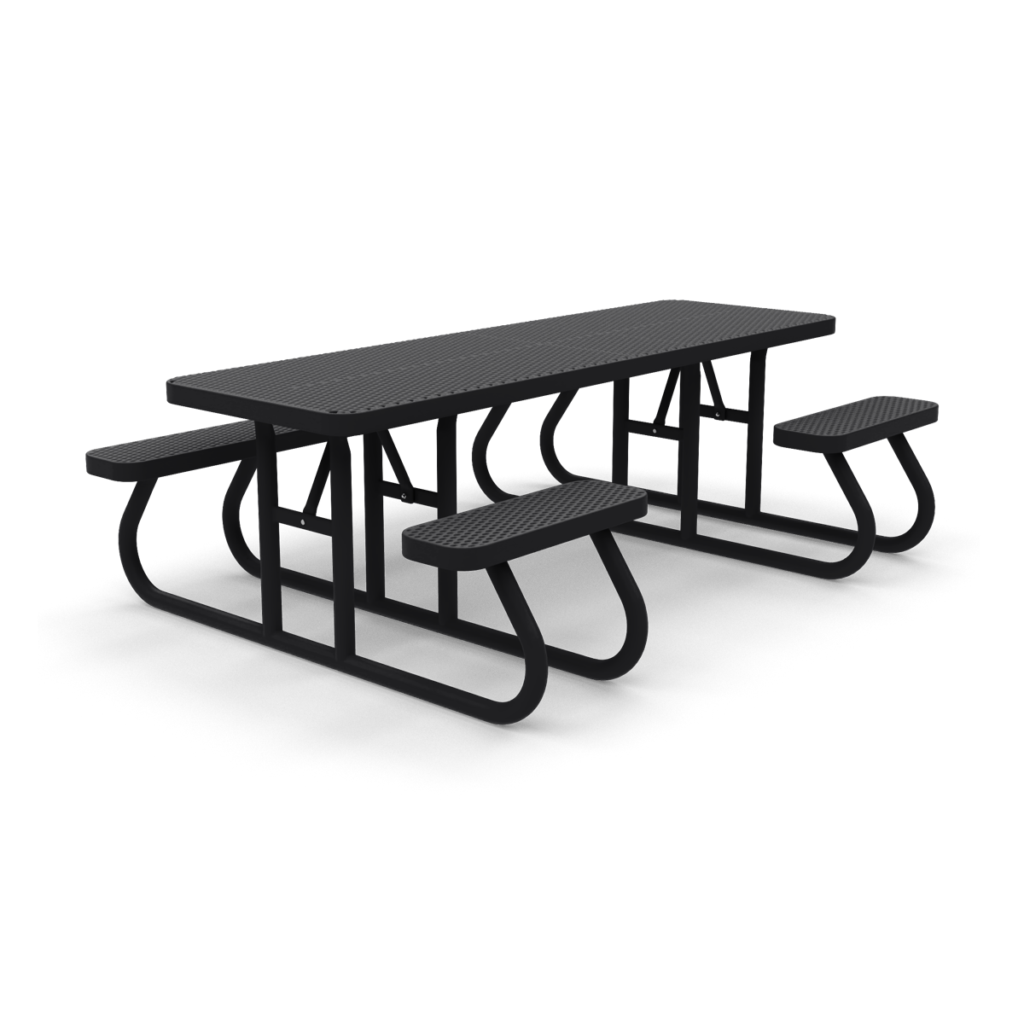
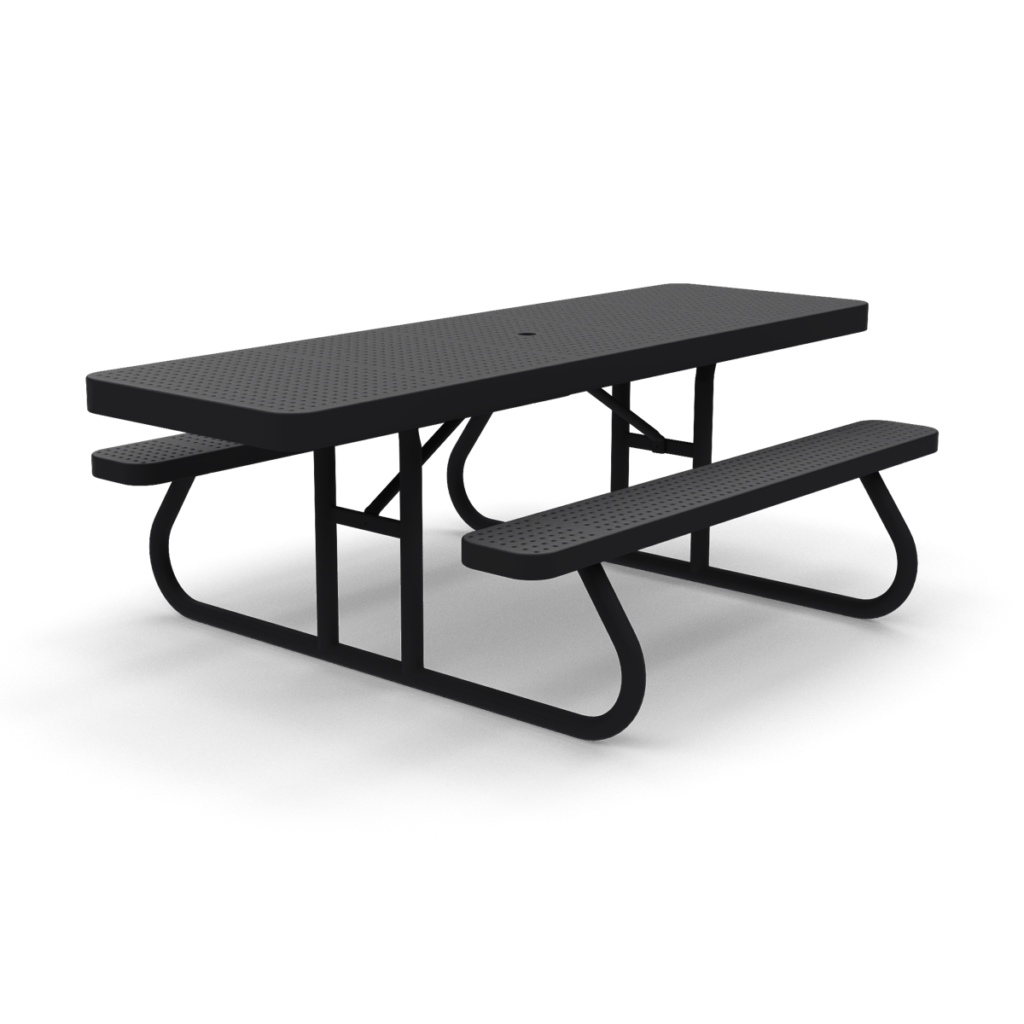
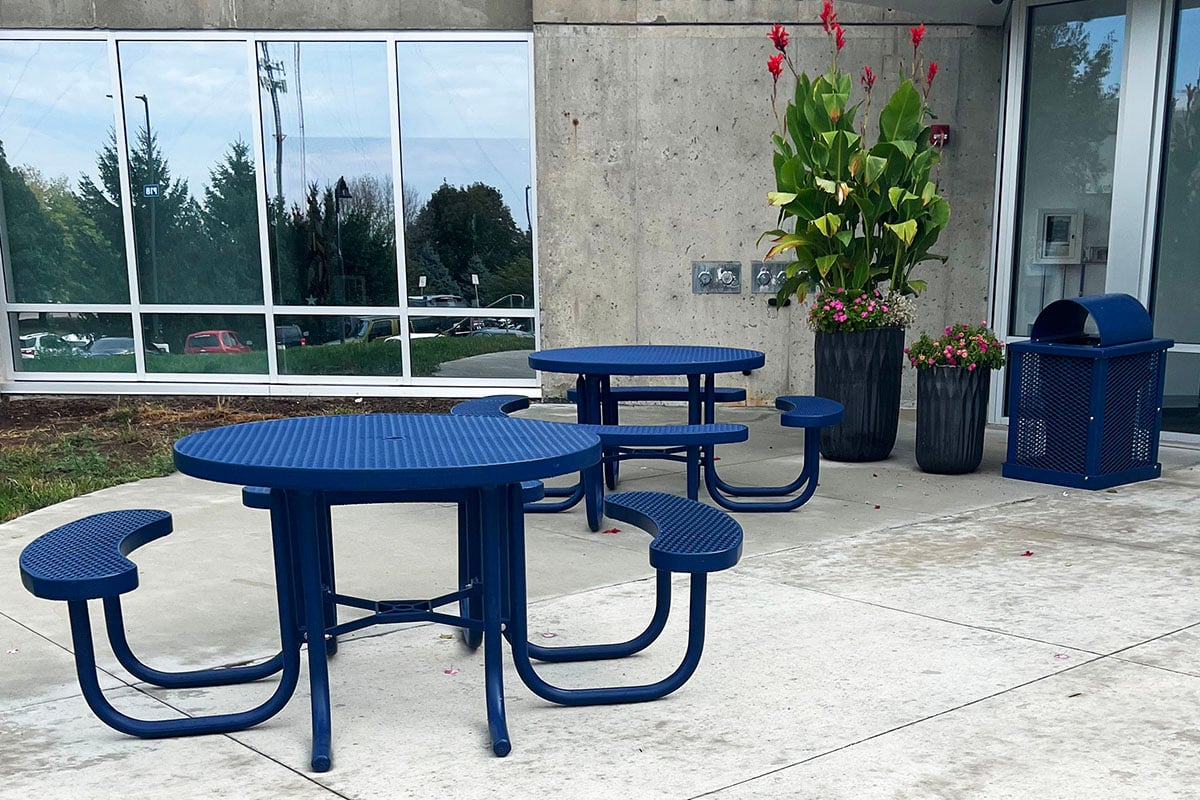
Group study. Project teams and study groups need a shared surface and seating that faces inward. This is where commercial picnic tables earn their place. A square table seats eight with everyone facing each other, and the walk-through design means nobody has to climb over a bench to sit down. For dining-adjacent spaces, the antimicrobial protection now available in our plastisol coating is a real advantage where students eat and work at the same table.
Social gathering. The high-traffic spots near coffee carts and student unions need volume and flexibility. A mix of bench lengths and tables clustered together creates the busy, sociable feel that pulls students in. That is the third-place effect, made out of furniture.
Zoning a space this way is what separates a quad students use from one they cut across. It’s also the part of the plan competitors’ “buy these five products” guides skip entirely.
Put the Seating Where the Signal Is
The best furniture in the wrong spot stays empty. Two placement factors decide whether a study space works, and both are easy to miss on a landscape plan.
First, connectivity. Students expect Wi-Fi and power to reach the lawn, not stop at the library doors. Cluster study seating within reliable signal range and near accessible outlets, or the space becomes a scenic spot people pass through instead of a place they work.
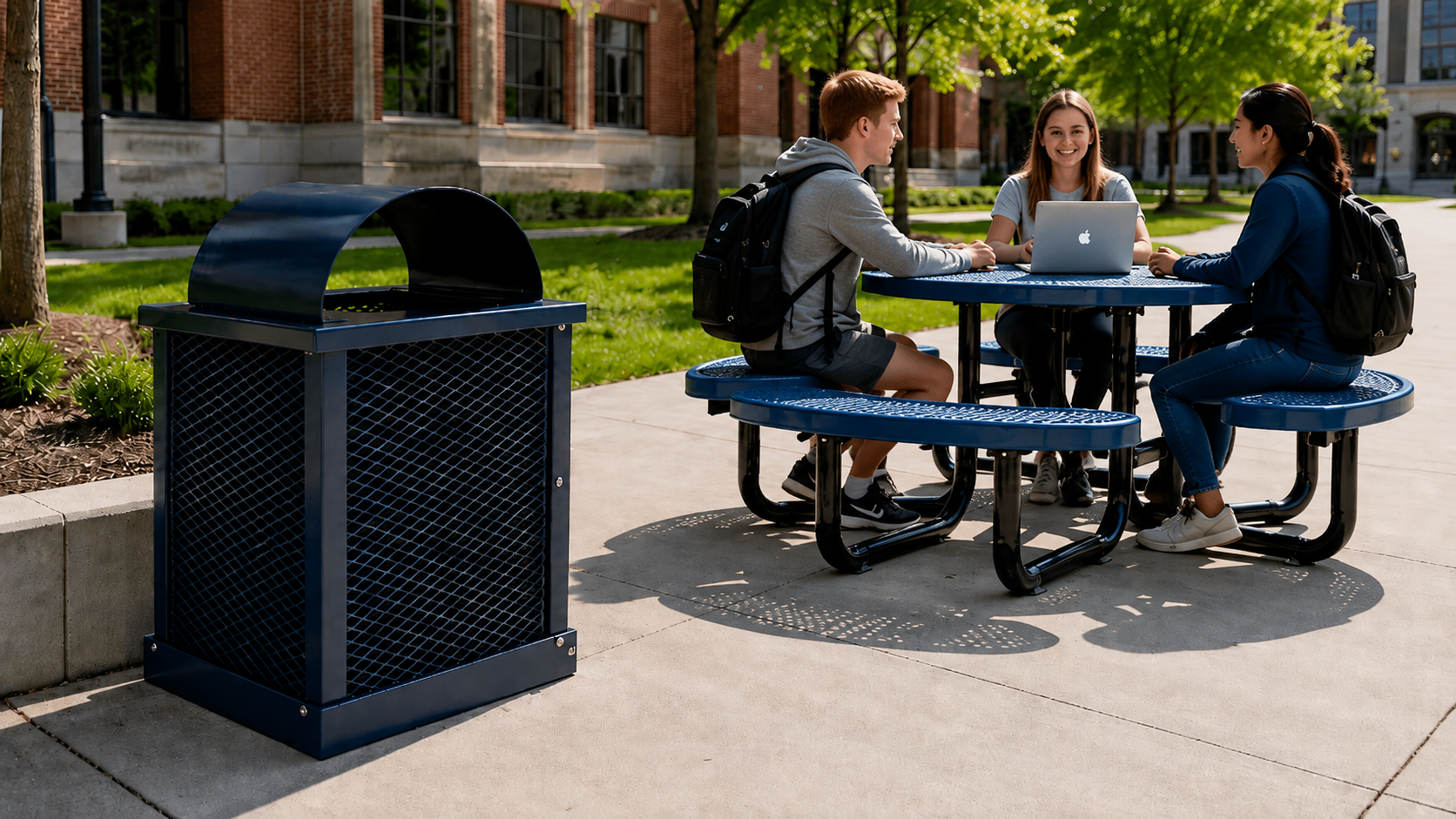
Second, permanence. Students rearrange furniture. They pull tables together for a group, then leave them scattered across the quad. Loose furniture also becomes a projectile in the first big storm. Our surface mount kits anchor tables and benches to a concrete pad so your layout stays the layout you designed, and heavy plastisol-coated steel won’t tip or blow away. Round out the zone with Premier Polysteel receptacles, which install surface mount or in ground, and loop or t-post bike racks so the whole space reads as one intentional destination.
Built for What a Campus Actually Does to Furniture
Campus furniture takes abuse that park furniture never sees. Students climb on tables, sit on backrests, drag seating across pavement, and use it every single day for years. Furniture that only survives gentle use is a repurchase waiting to happen.
This is where the way we build matters. Most manufacturers coat only the visible surfaces of their steel. Premier Polysteel coats every part, including tops, seats, legs, braces, and even in-ground posts, in a 1/8-inch-plus layer of plastisol (polyvinyl) bonded directly to the steel. No exposed metal means no rust, no sharp edges, and no surface that scorches a student’s hands in August sun.
We’ve parked a 3,400-pound car on one of our picnic tables to prove the frame holds. A quad full of students leaning, climbing, and piling backpacks is a lighter load than that. Because the coating is sealed, there are no open pipe ends for bees or insects to nest in either, a small detail that matters at a table where people eat.
Seating Every Student on Campus Can Use
An outdoor study space only works if every student can use it, and accessible seating is where that promise gets tested. A quad that looks inclusive in the rendering can still leave a wheelchair user without a single table they can actually pull up to.
Premier Polysteel’s ADA Accessible picnic tables are designed around ADA accessibility recommendations, with extended tops that leave dedicated wheelchair space while keeping standard seating on the remaining sides. Because they carry the same full plastisol coating as the rest of our line, accessible tables take the same heavy campus use, with no exposed metal, sharp edges, or hot surfaces to design around.
The Campus Sustainability Case Most Planners Miss
If your campus has a carbon-neutral or LEED target, the instinct is to spec furniture made from recycled material. But recycled-plastic and lightweight furniture that warps, fades, and cracks under heavy student use ends up back in a landfill in a handful of years, and then you buy and ship its replacement. That replacement cycle is the hidden carbon cost nobody puts in the sustainability report.
The lower-impact choice is the one you buy once. Premier Polysteel furniture is engineered to last decades in heavy campus use, backed by an industry-leading 20-year warranty on the products we manufacture. Specify it for the new quad, and you’re not specifying it again for the next class, or the one after that. Fewer replacements, fewer shipments, less waste. Durability is the sustainability story that actually holds up on a college campus.
That framing also happens to be the one a budget office likes: a table you never repaint, re-slat, or replace is a line item you stop revisiting.
School Colors That Still Look Like School Colors in 20 Years
A quad is part of the campus brand, and color is where cheap furniture gives itself away fastest. Painted and powder-coated finishes fade, chip, and peel, so the crisp school colors you installed look tired within a few seasons and mismatched within a few years.
Our color is different because it isn’t a finish sitting on top of the metal. It’s mixed through the full thickness of the plastisol coating. It’s UV-stable, so it holds its tone through years of direct sun, and because the color runs all the way through, a scratch doesn’t expose bare steel or a different shade underneath. Premier Polysteel offers a range of UV-stable color options to match campus palettes, and a bench installed for freshman move-in still looks right at that student’s graduation.
For campuses that want a more architectural look, our laser-cut steel design tables and benches bring a modern, patterned surface to signature spaces without giving up any of the durability.
“Our purple picnic tables from Premier Polysteel were the perfect addition to our 3 exterior courtyards! The color was true to the sample, and within the year that we’ve had them on site, there hasn’t been any wear and tear or fading. They still look as beautiful as the first day we assembled them. In addition, they not only bring school spirit to our student housing communities with our Husky purple, but they also did the job of completing the look of our updated courtyards for our residents to enjoy year round. Thank you Premier Polysteel! We’ve just ordered trash receptacles to match, and can’t wait to add those to our properties later this month!”
-University of Washington “Husky Purple” Picnic Tables | Seattle, WA | Tuesday Kelly, General Manager
Campus Outdoor Furniture: Common Questions
What types of outdoor furniture are best for college campuses?
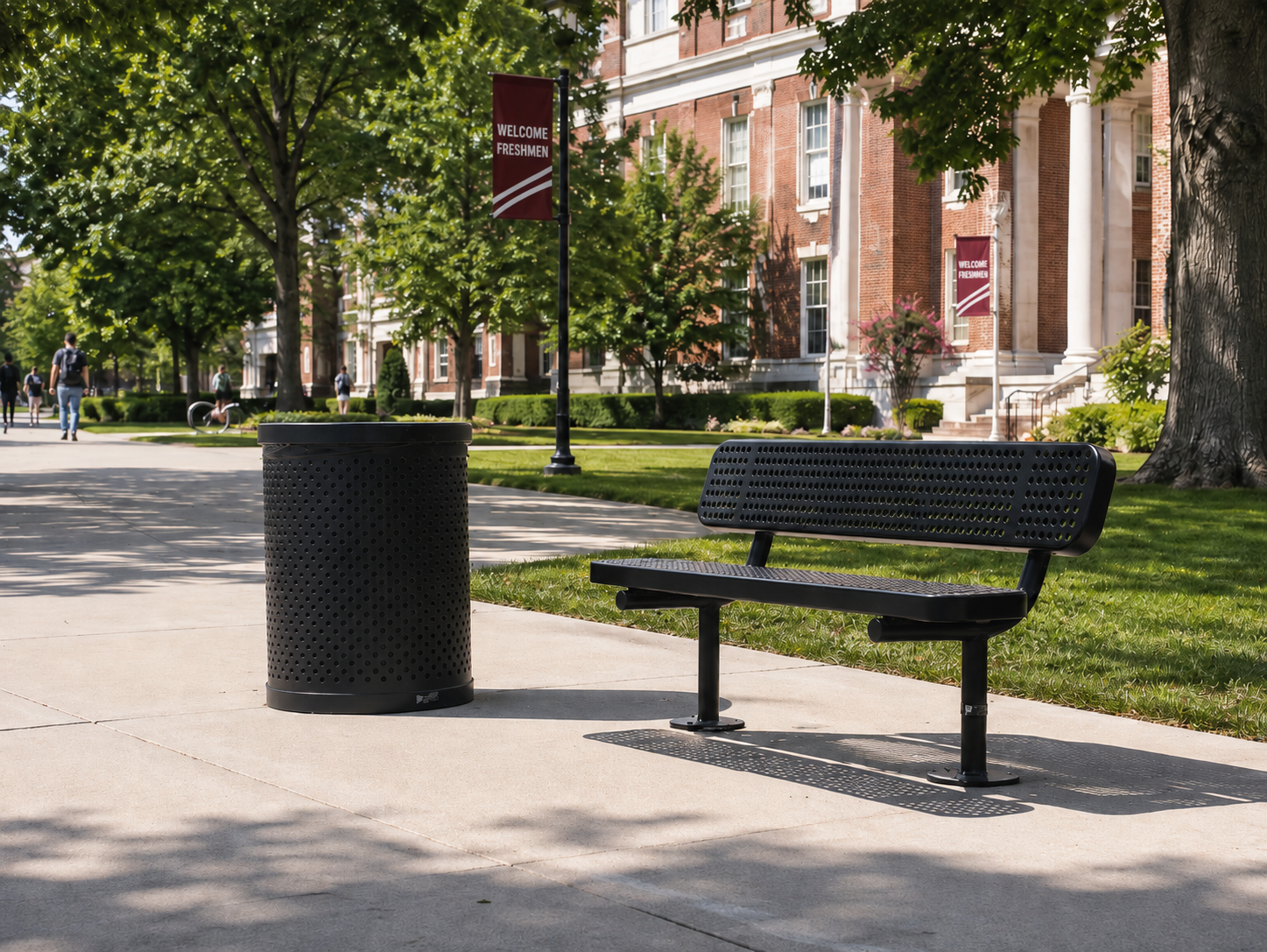
The most-used campus pieces are commercial picnic tables for group study and dining, benches for solo and walkway seating, and receptacles to keep spaces clean. Premier Polysteel builds all of them in plastisol-coated steel, so they take heavy daily student use without rusting, fading, or needing repainting.
How do you design outdoor campus spaces for studying and collaboration?
Design for how students actually study: solo-focus seating near the action, group tables with shared surfaces, and social clusters in high-traffic spots. Place seating within Wi-Fi and power range, then anchor it so your layout stays intact. The right mix turns a lawn into a space students choose to use.
Why is accessible seating important for campus outdoor spaces?
Accessible seating is what makes an outdoor space usable for every student on campus, not just most of them. Premier Polysteel’s ADA Accessible picnic tables are designed around ADA accessibility recommendations, and they carry the same durable plastisol coating and industry-leading 20-year warranty as the rest of the products we manufacture.
Build a Campus That Ages as Well as It Looks
Outdoor study spaces work when the design matches how students behave and the furniture survives how students treat it. Get the zoning, placement, and construction right, and you get a quad that fills up instead of one students walk past.
Premier Polysteel has helped campuses do exactly that for decades, and our team can help you match the right products to each space on your plan. Request a quote to start specifying, and see our recommended campus furniture lineup for product-level detail. Planning for a K–12 setting too? Our safety-first school furniture guide covers those spaces.