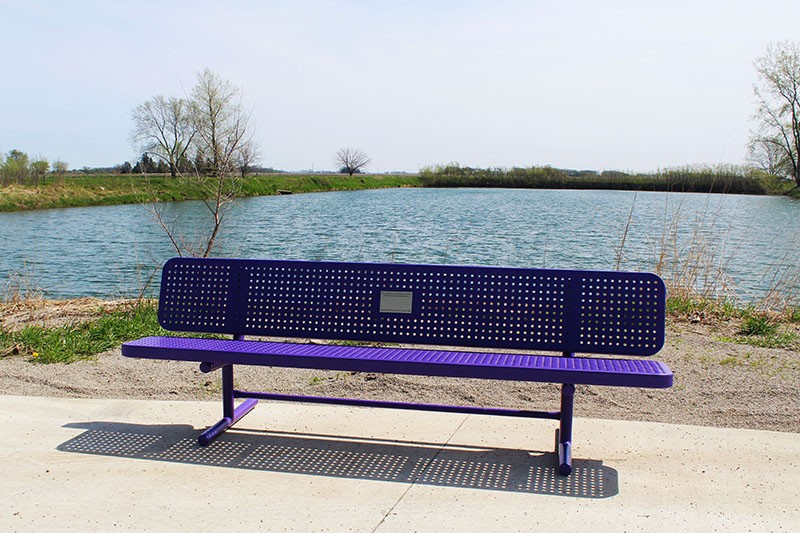
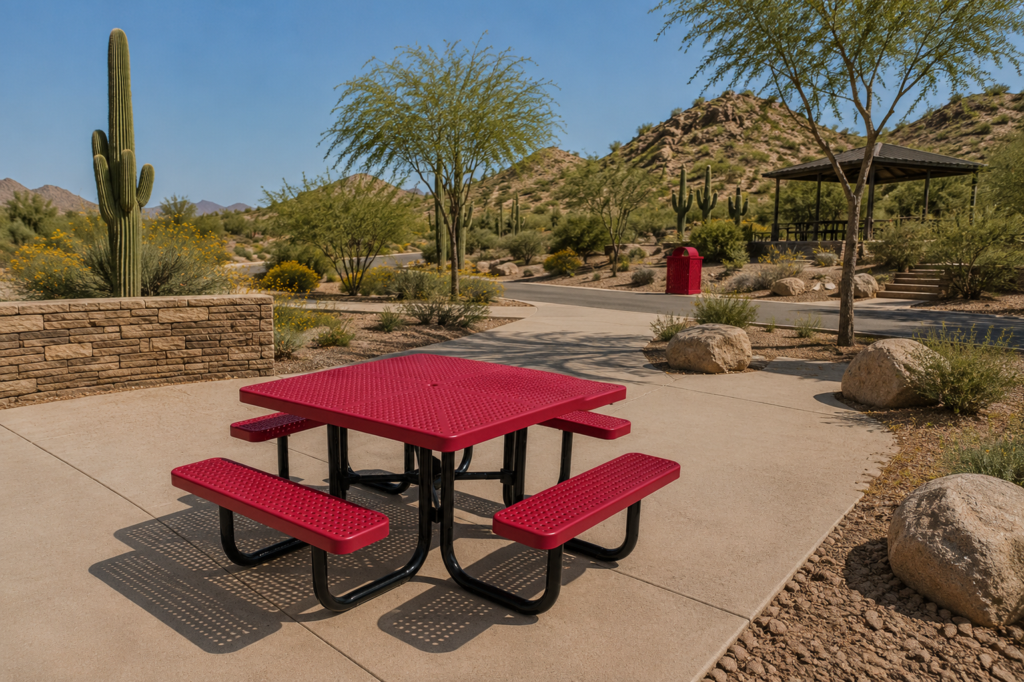
The most persistent myth in commercial site furnishings is that vinyl coatings can’t survive the sun. It was a fair assumption about the brittle vinyl of decades ago, and a costly one today. A modern UV-stabilized plastisol (polyvinyl) coating is now one of the most weather-stable finishes a specifier can put outdoors, and writing it off means overlooking a material that outlasts most of what ends up on the plan.
Premier Polysteel bonds that plastisol coating to a steel core in a layer more than 1/8 inch thick. That combination, plastic on the outside and steel on the inside, is what lets it beat both polyethylene lumber and bare metal across the temperature extremes commercial furniture actually faces. Here is the material science behind why.
What Plastisol Coating Actually Is
A plastisol coating is a liquid suspension of fine polyvinyl particles in a plasticizer that is applied thick, then oven-cured so it fuses into a single continuous, flexible layer bonded to the metal underneath. Premier Polysteel builds ours to more than 1/8 inch, so it behaves like a structural skin rather than a thin surface film.
That thickness is the whole point. Paint and powder coatings measure in mils, thin enough that a chip, a scratch, or a scuffed edge exposes the steel to moisture. A 1/8-inch plastisol layer bonded and cured to the frame leaves no exposed metal anywhere, including the legs, braces, and undersides most manufacturers leave bare.
The Sun Myth: Why Modern Plastisol Doesn’t Break Down
The “vinyl chalks and cracks” reputation comes from early formulations that lacked real UV protection. Today’s plastisol is a different material. High-performance UV-stabilized polyvinyl formulations are now engineered to withstand years of sun exposure without the chalking and cracking that plagued early vinyl. Premier Polysteel is confident enough in that stability to back its plastisol-coated products with an industry-leading 20-year warranty.
Premier Polysteel’s plastisol is UV-stable and mildew-resistant, and the color is mixed through the full thickness of the coating rather than sprayed on top. Because the pigment runs all the way through, there is no thin painted layer to fade off or peel, and a surface scratch doesn’t reveal a different shade underneath. The oven-curing step also produces a smooth, continuous surface with nowhere for moisture or debris to collect, and our coating includes a built-in antimicrobial additive as an added layer of protection for the finish.
Plastisol vs. Polyethylene: A Structural Question, Not a Coating One
Polyethylene (HDPE) lumber solves the rust problem by being all plastic. But that same choice means the plastic has to do two jobs at once: it is both the visible surface and the load-bearing structure. That’s where extreme temperatures start to matter.
Solid polyethylene expands and contracts several times more than steel across the same temperature swing, and its stiffness declines as temperatures climb toward its continuous-load service limit, generally cited in the 175–180°F range, per published HDPE material data. On a long bench span or a table under sustained load on a hot day, an all-plastic member can deflect and creep in ways a steel frame simply does not.
Premier Polysteel sidesteps the tradeoff entirely. The steel core carries the load and holds its dimensions through heat and cold, while the plastisol coating delivers the corrosion resistance and comfortable touch temperature that make plastic attractive in the first place. You get the surface benefits of a polymer without asking a polymer to be the structure.
Plastisol vs. Bare and Powder-Coated Metal: Rust and Heat
Against uncoated or powder-coated metal, the failure points are rust and surface temperature. Powder coating is measured in mils, so the moment it chips at an edge or a fastener, moisture reaches the steel and corrosion begins, staining the concrete beneath it as it spreads.
Heat is the other problem. Dark or bare metal in direct sun routinely reaches 130 to 160°F, hot enough to cause a contact burn in seconds and well past the roughly 120°F where skin damage begins, according to surface-temperature burn research. A plastisol coating does not conduct heat the way exposed metal does, so a Premier Polysteel seat stays comfortable to sit on in full sun.
The Cold Half of the Equation
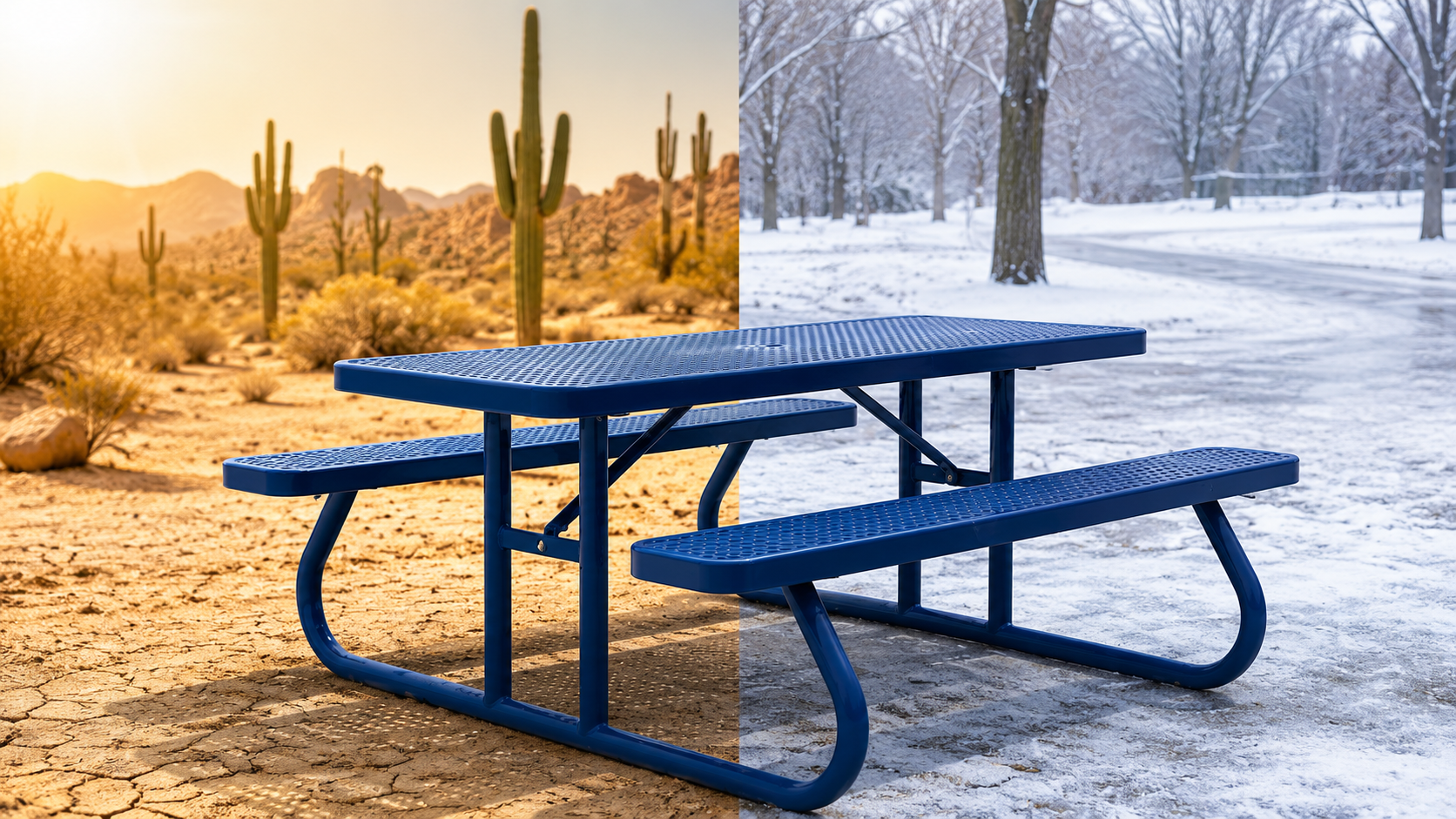
Heat gets the attention, but winter is where a lot of outdoor furniture quietly fails. Freeze-thaw cycles and de-icing salt punish any spot where bare steel is exposed. Salt accelerates corrosion, and once rust starts under a chipped powder coat, each freeze widens the breach. Bare and powder-coated metal carry that risk straight into the maintenance budget.
Premier Polysteel’s plastisol-coated steel gives winter no opening. The coating stays flexible rather than turning brittle as temperatures drop, so it moves with the steel through freeze-thaw cycles instead of cracking, and because no metal is exposed anywhere, de-icing salt has nothing to corrode. That protection continues below the ground line. Premier Polysteel’s in-ground posts are coated through the burial point, so freeze-thaw cycles and road-salt runoff never reach bare steel even where the post is buried, which is exactly where corrosion on an ordinary post starts out of sight. The steel core holds its shape and load rating in the cold exactly as it does in the heat. That is what “built to last in ALL climates” means at the material level, not a slogan but a consequence of putting a flexible, fully bonded coating over a stable steel frame.
The Head-to-Head
For a specifier weighing materials on a submittal, here is how the three stack up across a full temperature range.
| Property | Plastisol-coated steel (Premier Polysteel) | Polyethylene (HDPE) lumber | Bare / powder-coated steel |
|---|---|---|---|
| Load-bearing element | Steel core, dimensionally stable in heat and cold | Plastic is the structure; stiffness drops as temps rise | Steel core (strong) |
| Rust | None; 1/8″+ bonded coating, no exposed metal | Does not rust | Rusts wherever coating chips or scratches |
| Surface temperature in sun | Insulates; stays comfortable to touch | Moderate | 130-160°F; burn risk above ~120°F |
| Thermal movement | Moves with steel (minimal) | Expands/contracts several times more than steel | Moves with steel (minimal) |
| UV performance | UV-stable; color mixed through the coating | Surface can chalk and fade over time | Paint/powder fades, chips, and peels |
| Mildew / fungal | Oven-cured, mildew-resistant; antimicrobial option | Resists moisture | Not applicable; failure mode is rust |
| Maintenance | None; no repainting or recoating | Low | Repaint or recoat once the finish is breached |
| Warranty | 20-year on PP-manufactured products | Varies by maker | Varies by maker |
What This Means on the Plan
For a landscape architect or specifier, the material choice is a risk decision made years before anyone sees a failure. Bare metal transfers the rust risk to the site. All-plastic furniture transfers the structural risk to the polymer. Plastisol-coated steel keeps steel doing the structural work and lets a proven, UV-stable coating handle everything the weather throws at it.
That’s a specification you can defend. Premier Polysteel’s plastisol-coated steel carries a 20-year warranty on the products we manufacture, comes in a range of UV-stable color options that hold their tone for decades, and is documented for submittals through our specifications and CAD resources. From commercial benches to tables, every part is fully coated, not just the surfaces that show.
Specify the Material That Survives
Extreme heat and cold expose the weak point in every outdoor material: rust in bare metal, movement in all-plastic lumber. Plastisol-coated steel is engineered so that neither one is your problem.
Put it on your next plan with confidence. Request a quote or spec package to get the documentation you need for your submittal, or see how the coating holds up in our zero-maintenance breakdown.