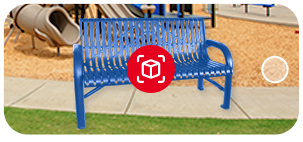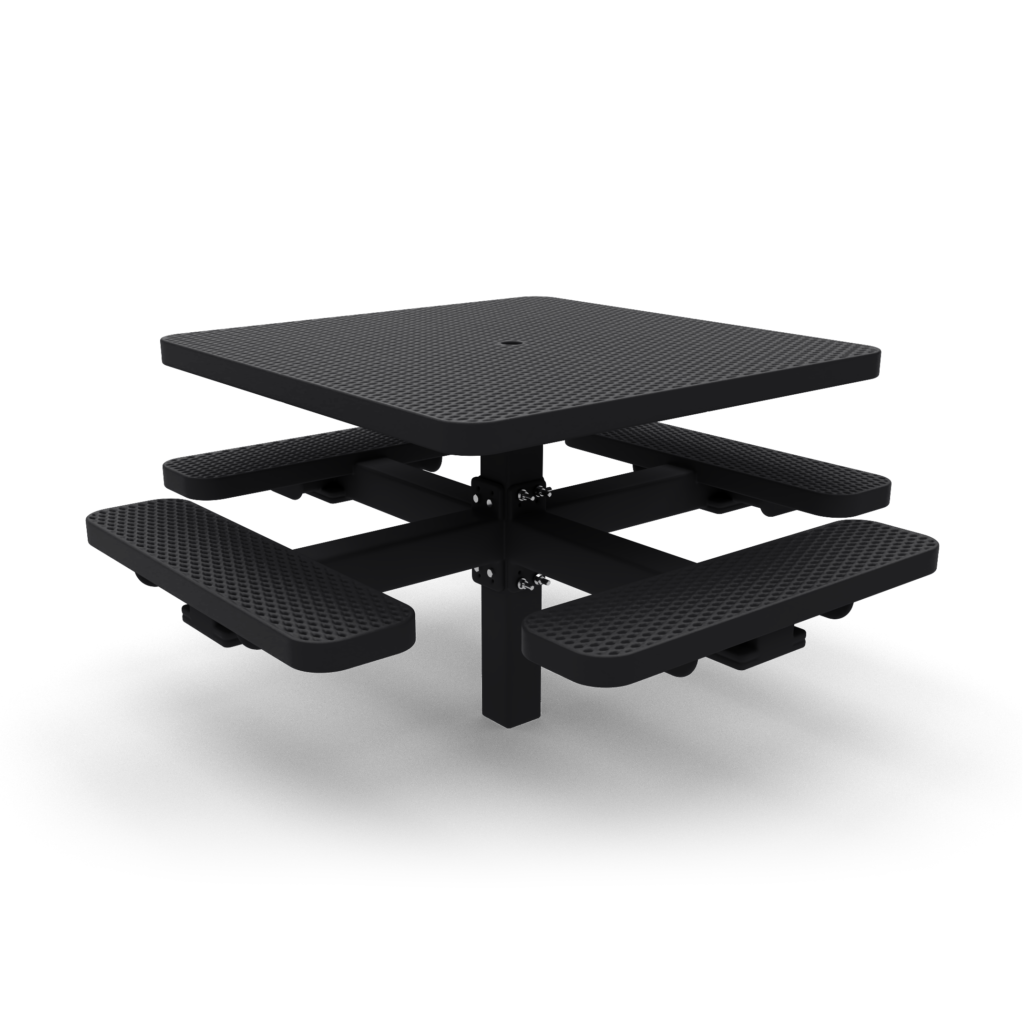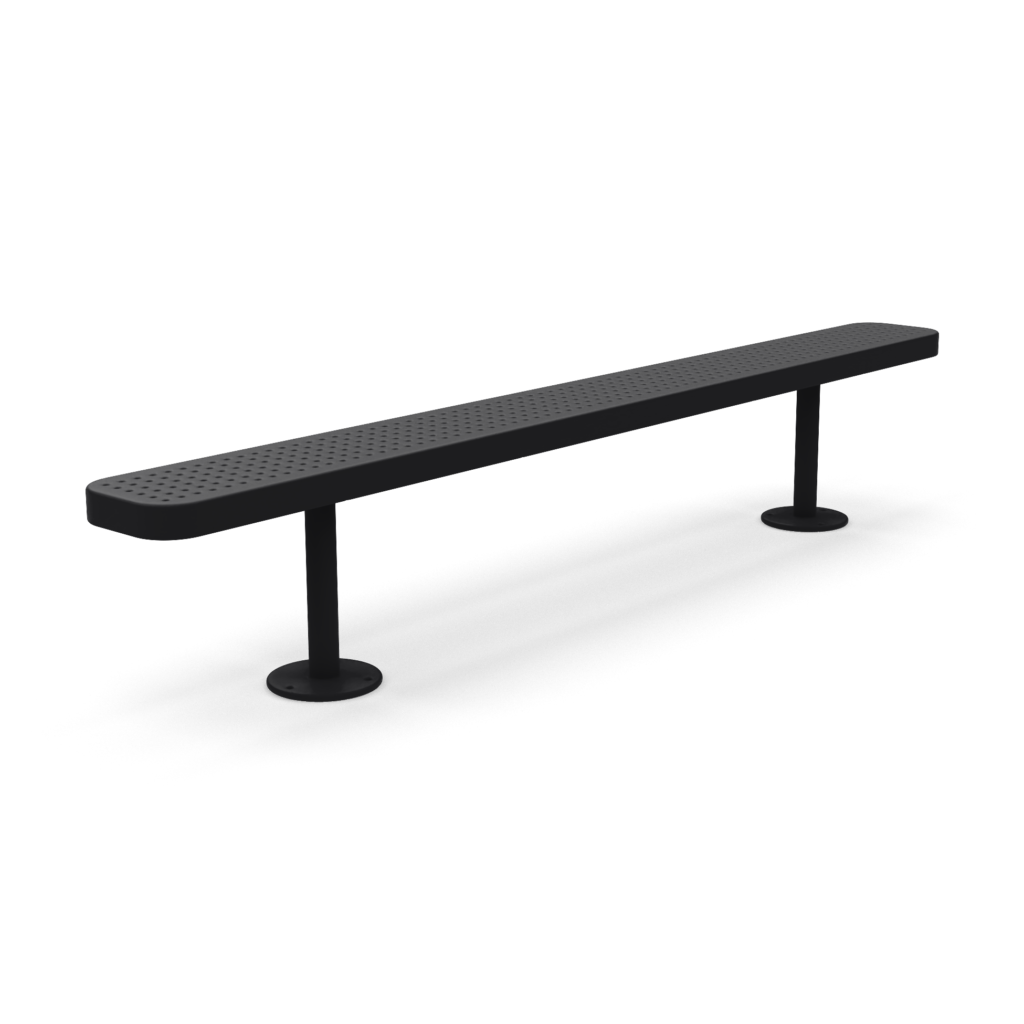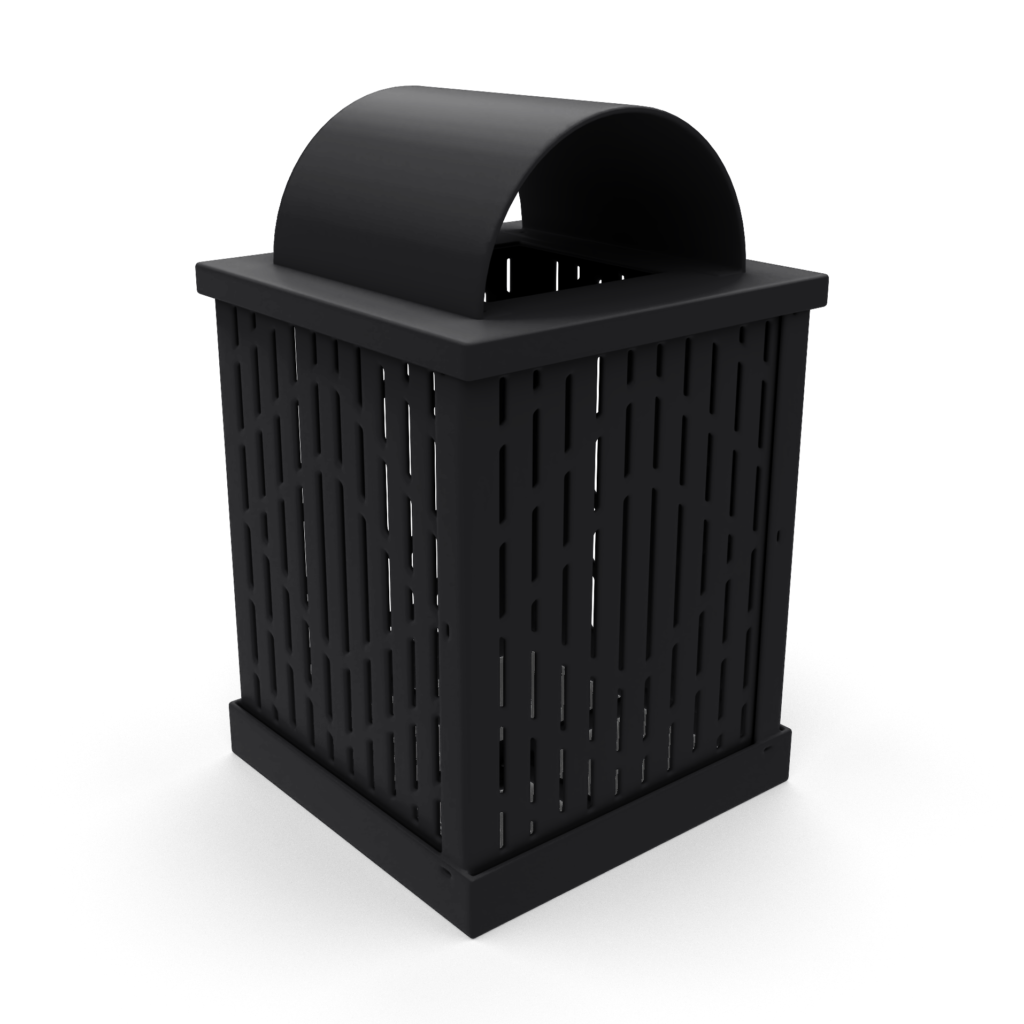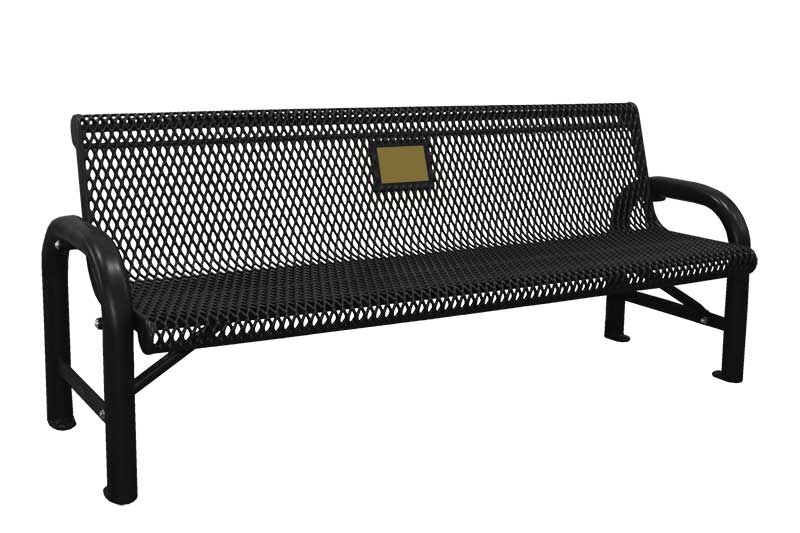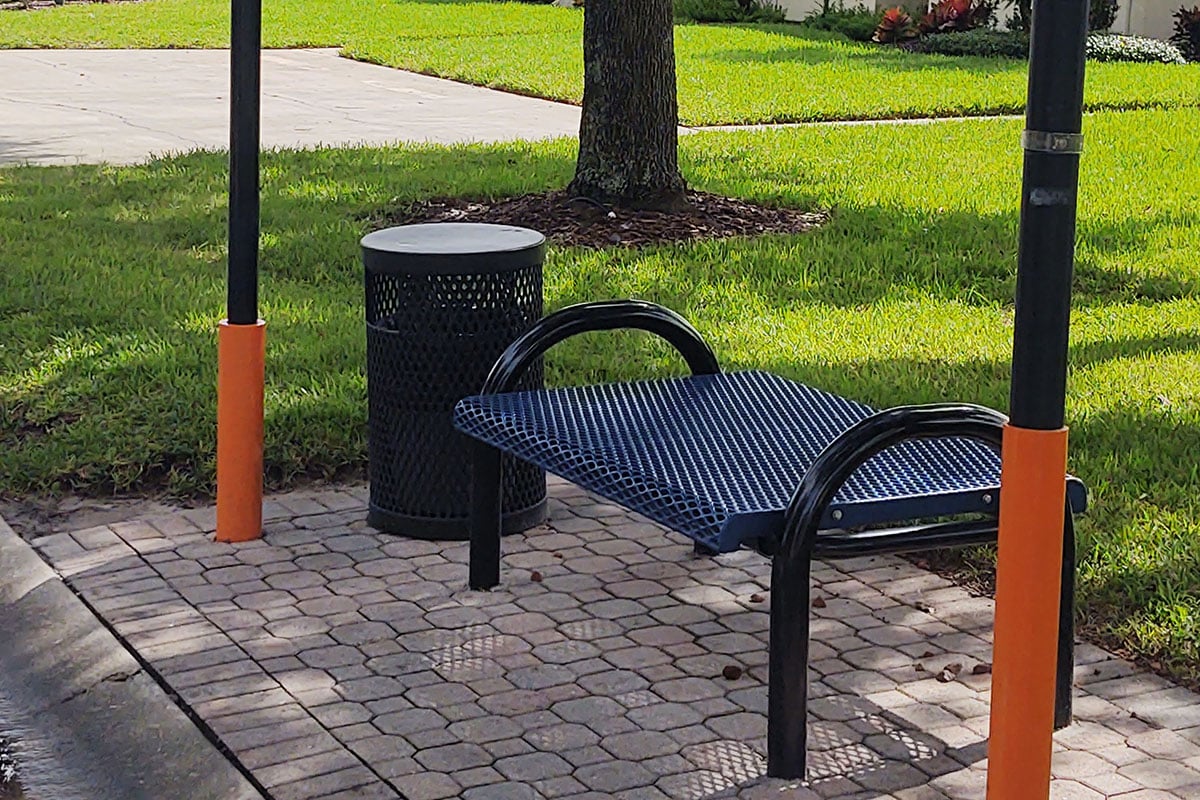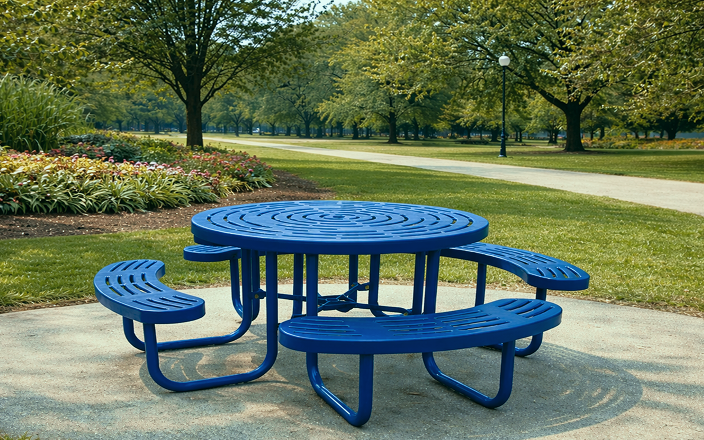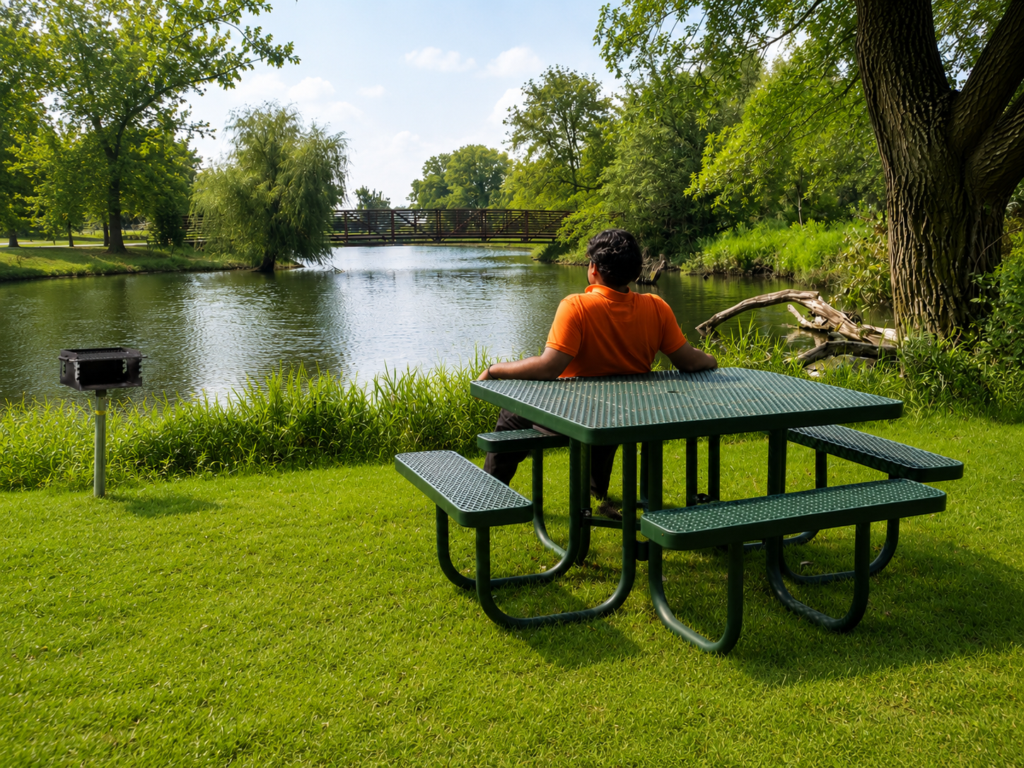
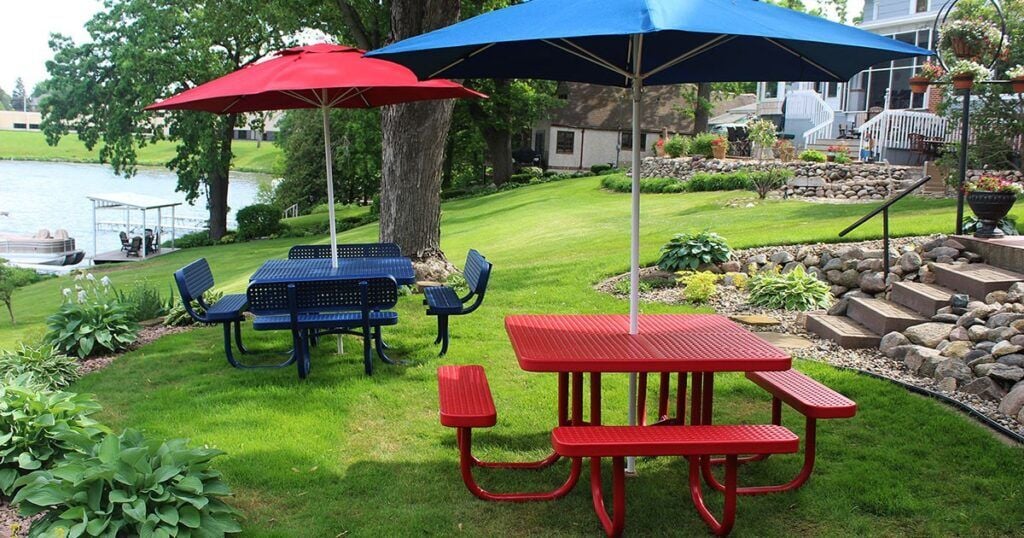
Every fall brings the same advice: cover your outdoor furniture or haul it inside before the snow flies. Search for it and you’ll find page after page of cover shopping guides and storage checklists. That advice is right for a lot of furniture. But covering outdoor furniture for winter assumes there’s something for winter to attack, and on commercial furniture with no exposed metal, there isn’t.
Plastisol-coated steel furniture can stay outdoors year-round, uncovered, with no winter storage and no seasonal prep. At Premier Polysteel, we build our tables, benches and receptacles in Northwood, Iowa, where winter is not a theory, and we build them to stay put through it.
Why Covering Outdoor Furniture for Winter Became the Default
The standard winter advice exists for a reason. Homeowner care guides repeat the same warnings: woven wicker fills with water that freezes and breaks the weave, molded plastic furniture can crack in freezing temperatures, and metal needs protection from rust. Most of those failures come back to moisture getting where it shouldn’t:
- Painted or powder-coated steel relies on a thin finish. Once that finish chips, moisture reaches bare steel and rust can start.
- Wood absorbs water, and furniture left out year-round is more prone to cracking, warping and rot.
- Molded plastic furniture can turn brittle and crack in freezing temperatures.
Covers and storage are a workaround for those weaknesses. They don’t fix the material. They try to keep winter away from it, and the same care guides warn that a cheap tarp can trap moisture underneath instead of keeping it out.
What Winter Can’t Get Through: a Fully Sealed Coating
Premier Polysteel furniture doesn’t give water a way in. Every product we manufacture is coated in a 1/8+ inch layer of plastisol (polyvinyl) that bonds permanently to the steel, sealing out moisture, UV and corrosion at every point. That includes the legs, the braces, the undersides and the in ground posts. There is no exposed metal anywhere.
That’s what makes covering unnecessary rather than just optional. With no bare steel, melting snow has nothing to rust. With every surface sealed, water has no way in. And because the color is mixed throughout the coating instead of painted on top, there’s no paint layer to peel or flake.
The sealed coating also closes off pipe ends, so there are no open holes for insects to nest in during summer or for water to collect in over winter.
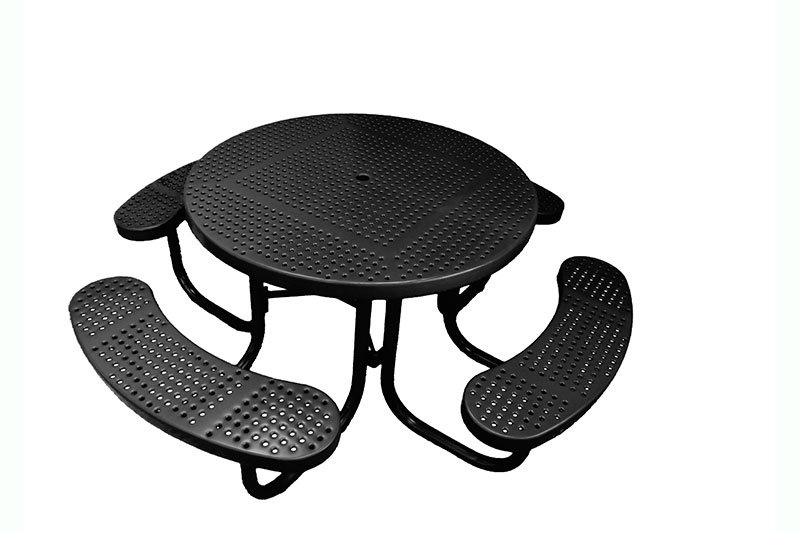
Cold to the Touch? Not on Plastisol
Anyone who has sat on a bare metal bench in February knows the problem. Steel pulls heat out of whatever touches it, so a bare metal seat feels colder than the air around it.
Plastisol doesn’t conduct temperature the way bare metal does. The surface won’t freeze to skin in cold weather, and it’s the same property that keeps the seat comfortably cooler than bare metal or powder-coated surfaces in July sun. That’s the real meaning of the title: the trait that makes our furniture comfortable in summer is exactly what makes it usable in winter.
For parks with winter trails, sledding hills and skating rinks, and for schools where kids head outside for recess in every season, that makes a difference. A bench people will actually sit on in January is a bench that’s earning its place all year, not just from Memorial Day to Labor Day.
Snow Removal and Plows Around Site Furniture
Furniture that stays out all winter has to share space with the equipment that keeps paths open. Two decisions make that easier.
Mount it where it belongs. Surface mount kits anchor tables and benches to existing concrete, and in ground mounting sets posts into poured concrete below grade. Either way, the furniture stays exactly where plow drivers expect it all season. Our furniture is also built heavy, so it won’t tip or blow away in winter wind.
Rinse it in spring. When the snow is gone, cleaning is soap and water. No sanding, no touch-up paint, no spring refinishing. Our maintenance guidance is the same in every season: no painting, staining or seasonal maintenance, just an occasional rinse.
The Labor Math of Covering and Storing
Covering and storing furniture is rarely a budget line, which is why it rarely gets questioned. It’s crew time, scheduled twice a year, every year. Here is a simple way to put a number on it for your own site:
(Number of pieces) × (minutes per piece to cover or move) × 2 trips per year × (crew hourly cost) = annual winter handling cost
Then add the costs the formula doesn’t show:
- Storage space that sits full of picnic tables for five months instead of holding equipment.
- Replacement covers, because tarps and covers tear, blow away and degrade in cold.
- Damage from handling. Every move is a chance to drop, scrape or chip a piece.
- Lost use. Furniture in a barn isn’t serving anyone on a sunny 45-degree Saturday in March.
Run that math across a parks system, a school district or an HOA with amenities spread across several sites, and the number gets real quickly. With Premier Polysteel furniture, the answer to the formula is zero: no covering, no storage, no spring setup. And every piece we manufacture is backed by our industry-leading 20-year warranty.
Where Year-Round Furniture Pays Off Most
Any site that stops putting furniture away saves the crew time. Some sites gain more than that, because their busiest days don’t stop when the weather turns.
- Parks and trails. Winter walkers, skaters and families at the sledding hill need somewhere to sit, lace skates or set down a thermos. Benches and picnic tables that stay out keep those spaces usable in January, and receptacles that stay put keep them clean.
- Schools. Kids go outside in every season. Furniture that stays installed through winter means no fall teardown on top of the back-to-school rush, and a plastisol seat that won’t freeze to skin is a better seat for a student than bare metal.
- HOAs and residential communities. Residents notice when amenities vanish for half the year. Leaving clubhouse and walking-path furniture in place keeps common areas looking cared for, with no storage contract to pay.
- Restaurants and patios. Plenty of operators run patio seating into the shoulder seasons and set it back up the first warm weekend of spring. Furniture that never left doesn’t need setting up.
- Campuses and venues. Large sites with furniture spread across acres feel the handling cost most, because every piece that moves takes a truck and a crew.
Whatever the setting, the question is the same: is your team spending winter protecting furniture, or using it? With Premier Polysteel, the furniture takes care of itself.
Built Where Winter Is Real
We don’t have to imagine what a hard winter does to outdoor furniture. Our plant is in Northwood, Iowa, and every product we make is cut, welded, coated, cured and inspected under one roof there. Made in the U.S.A. means our furniture comes from a place where snow, ice and deep cold are a normal part of the year, not an edge case.
The same coating protects our tables at a high-desert water park in Palmdale, California, which faces extreme UV, wind and dust instead. One coating, both extremes. That’s the whole idea: Premier Polysteel furniture loves winter as much as summer because nothing about the season changes how it’s built.
Planning for next season? Browse the 2026 catalog to see every table, bench and amenity built to stay outside all year.